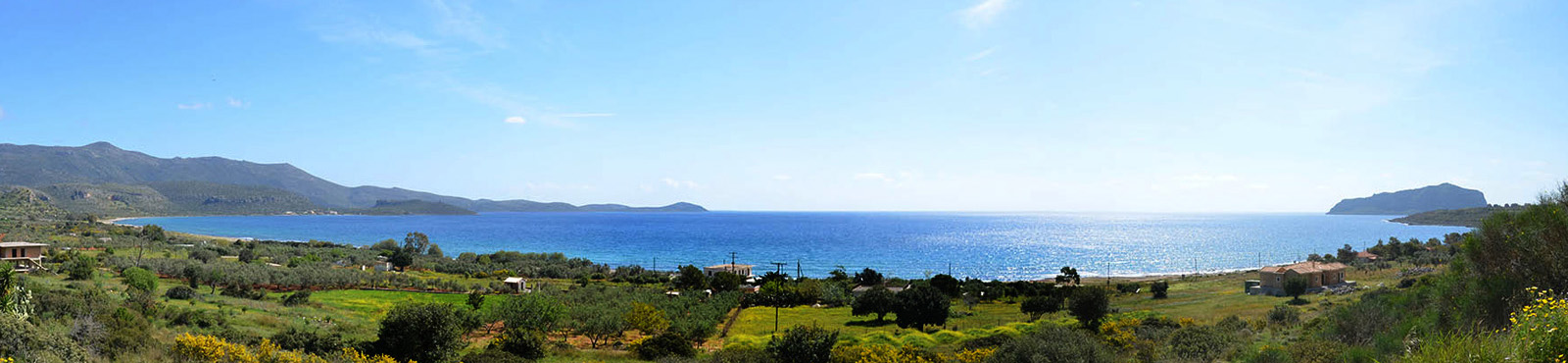
On the coast of Greece, in the district of Laconia, on the Peloponnese peninsula, a special Greek gourmet olive oil is produced…
The southernmost regions of Europe, especially Greece, are prized for their production of olive oil of the highest quality.
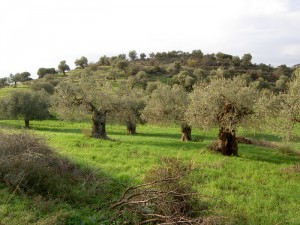
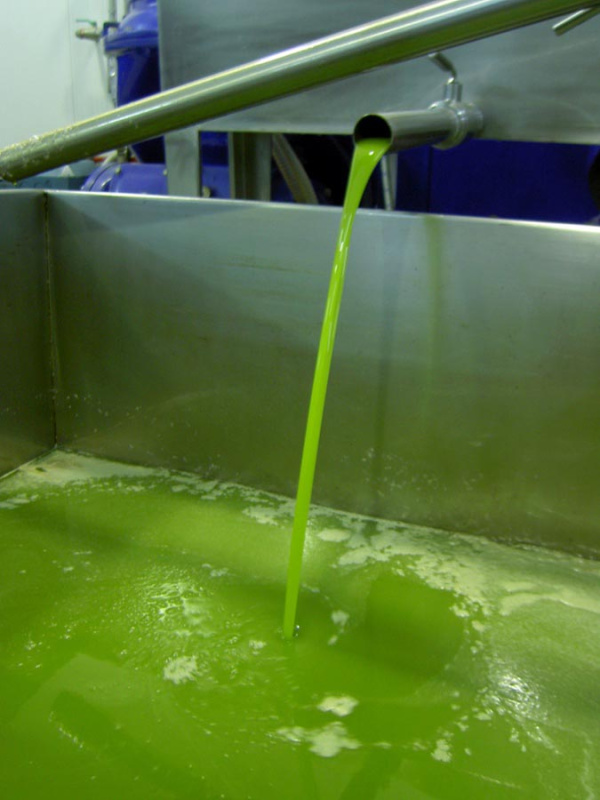
The LAKUDIA estate and its neighboring olive groves stretch from the coast up to approximately 300 meters above sea level on the sun-drenched Laconian coast . Here, on one of the southernmost promontories of Greece, the climate creates arguably the most favorable growing conditions in the world for top-quality olive oil. High-quality olive oils are produced by family-run farms on the surrounding small olive estates . The resulting oil is a vibrant green color, intensely fruity in flavor, and possesses a subtly bitter note.
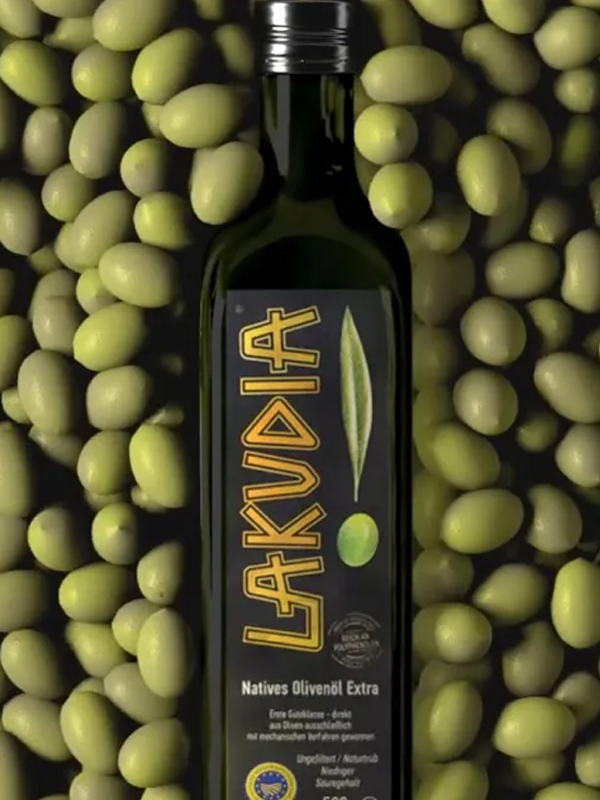
We use only select olive oils from controlled cultivation. These olive oils come exclusively from a single growing area within our "Protected Geographical Indication" (PGI), are not blended with other olive oils, and are not filtered. Our Greek olive oils are allowed to settle naturally after harvesting. The resulting naturally cloudy oils contain the full power and aroma of the olive, including the fruit pulp. LAKUDIA products are unique in their production, taste, and quality.
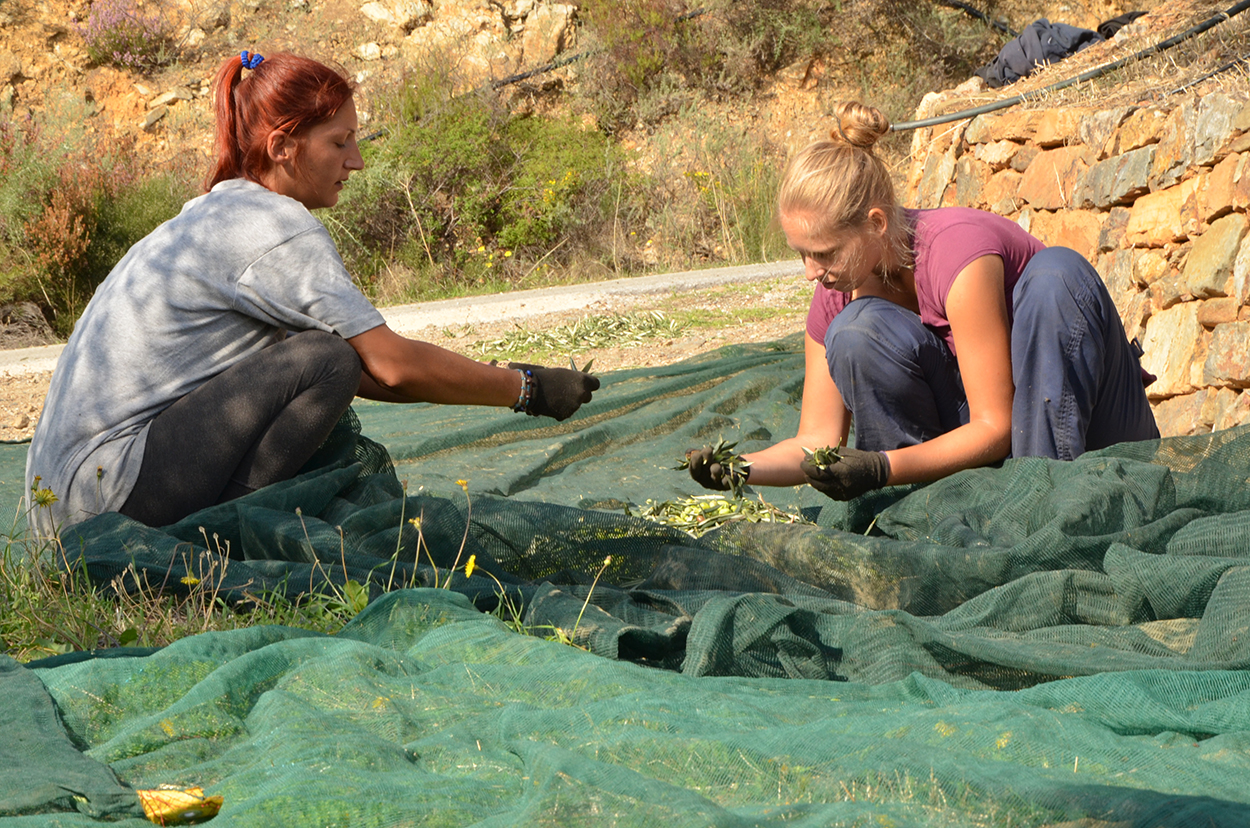
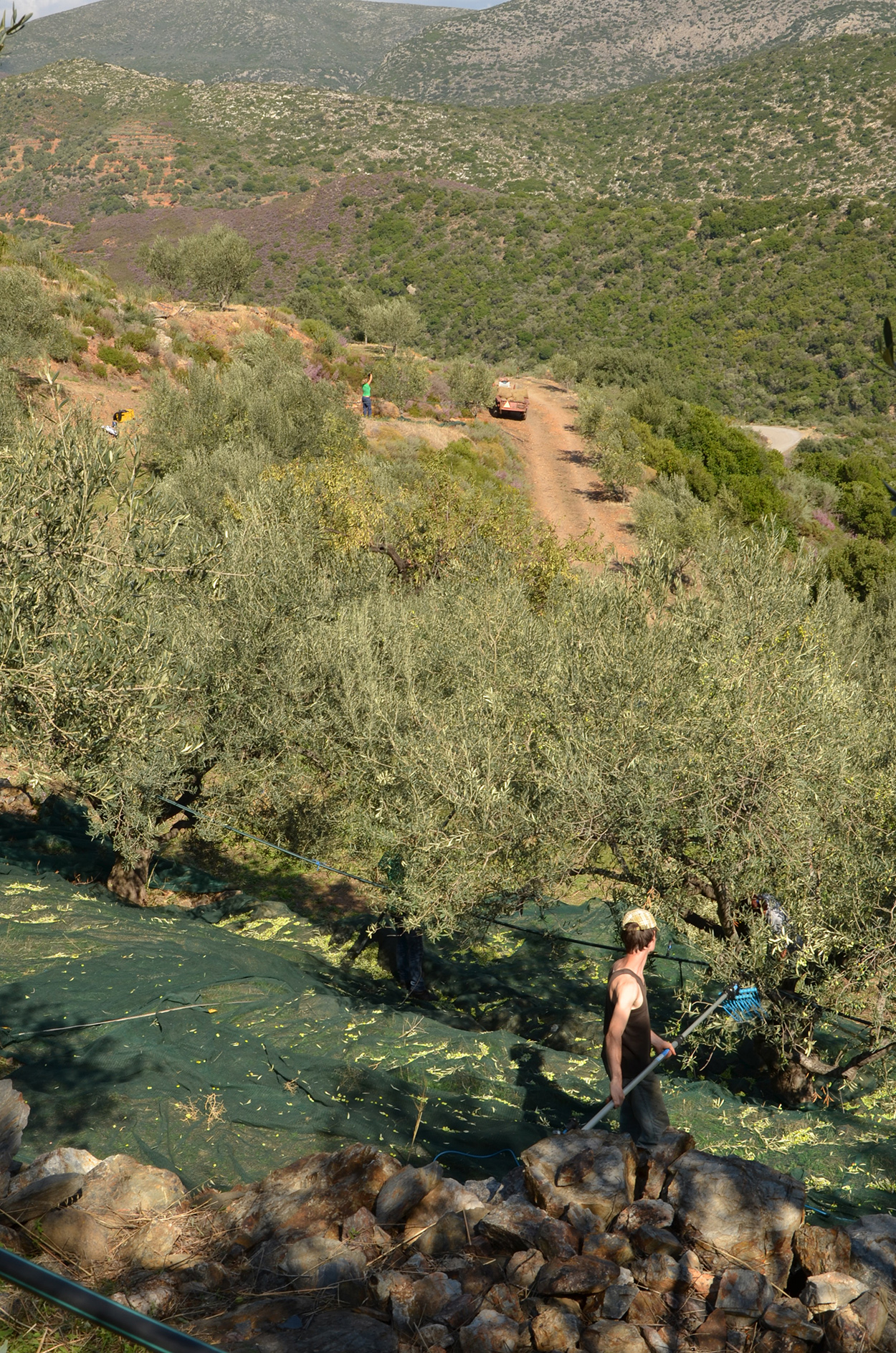
Olive harvest for our Greek LAKUDIA gourmet olive oil
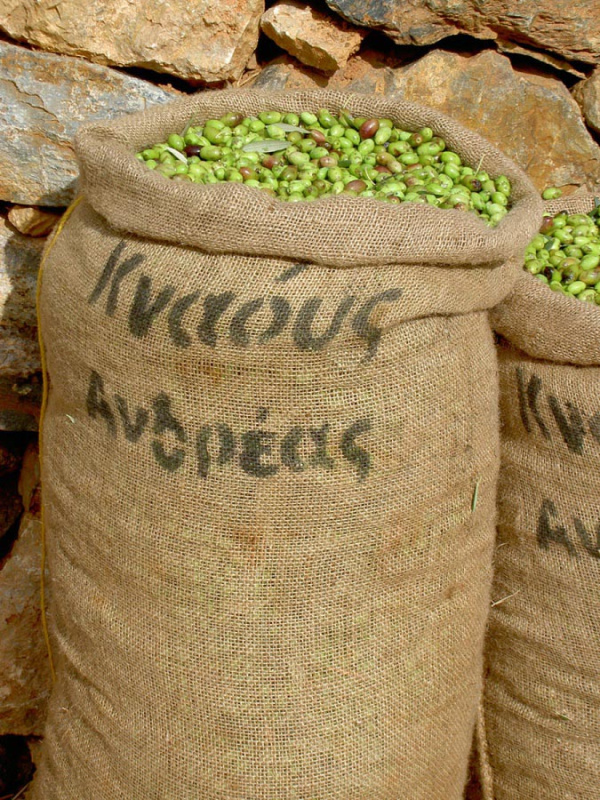
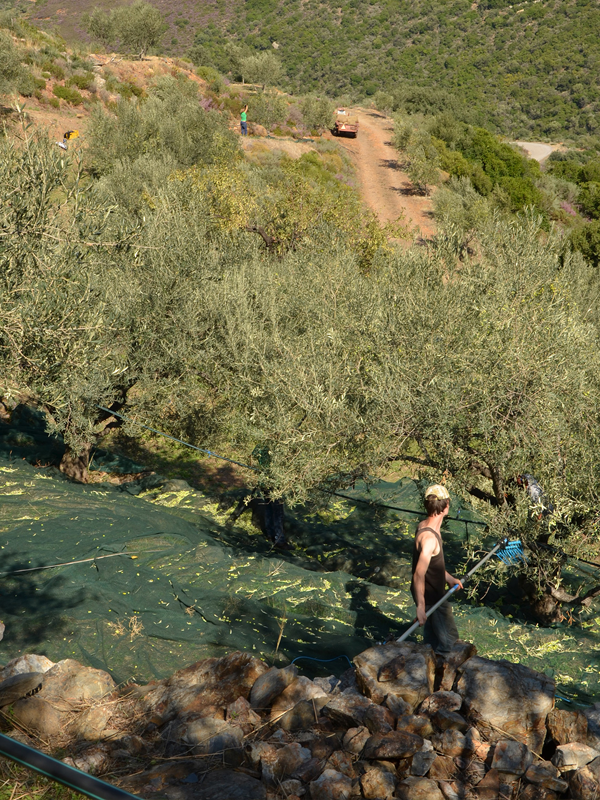
The main olive harvest season in the Mediterranean region begins in October and lasts until the end of January , rarely longer. The olive harvest is the most expensive part of olive oil production. The oil yield and quality depend significantly on the care taken during the harvest.
The ideal time for harvesting olives is when the olive is just changing color from green to purple .
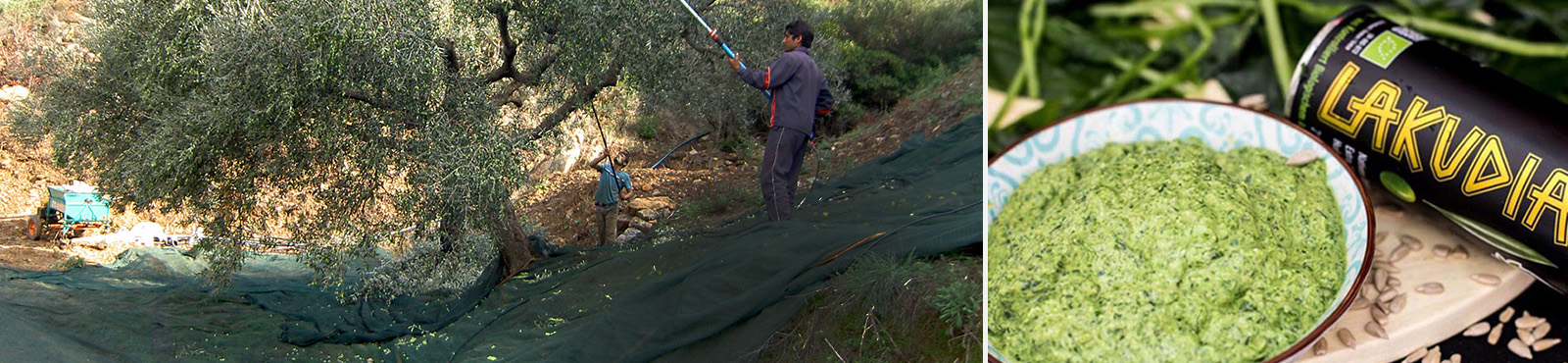
Depending on the region, a variety of harvesting methods have proven successful: In steep terrain, the olives still have to be picked by hand, just as they always have. Machines cannot be used there, so hundreds of men and women spend weeks working in the Greek olive groves. This is how the harvest is carried out in all of LAKUDIA's olive groves.
In flatter areas , harvesting machines help with the work: In some places, electric shakers shake the trees, causing the olives to fall into nets spread on the ground. In other areas, mobile equipment picks up the fruit from the ground.
In newer row plantations, the trees are shaken mechanically, and the fruit is simultaneously collected in containers. However, these harvesting methods are not used in the mountainous Peloponnese.
Speed and meticulous handling of the fruit are crucial during the olive harvest.
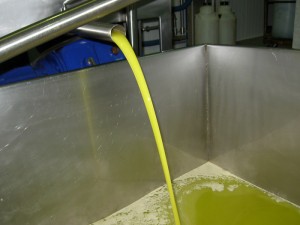
Once the skin is damaged or the natural degradation process of the olives has begun, the quality of the olive oil is significantly impaired. Therefore, olives must be pressed as quickly as possible after picking to ensure the best possible quality.
The quality of olive oil depends heavily on its transport and storage before pressing. Breathable crates or bags are ideal, while storing it in large piles outdoors or transporting it on truck beds is detrimental. Incorrect or prolonged storage can lead to characteristic off-flavors of olive oil.
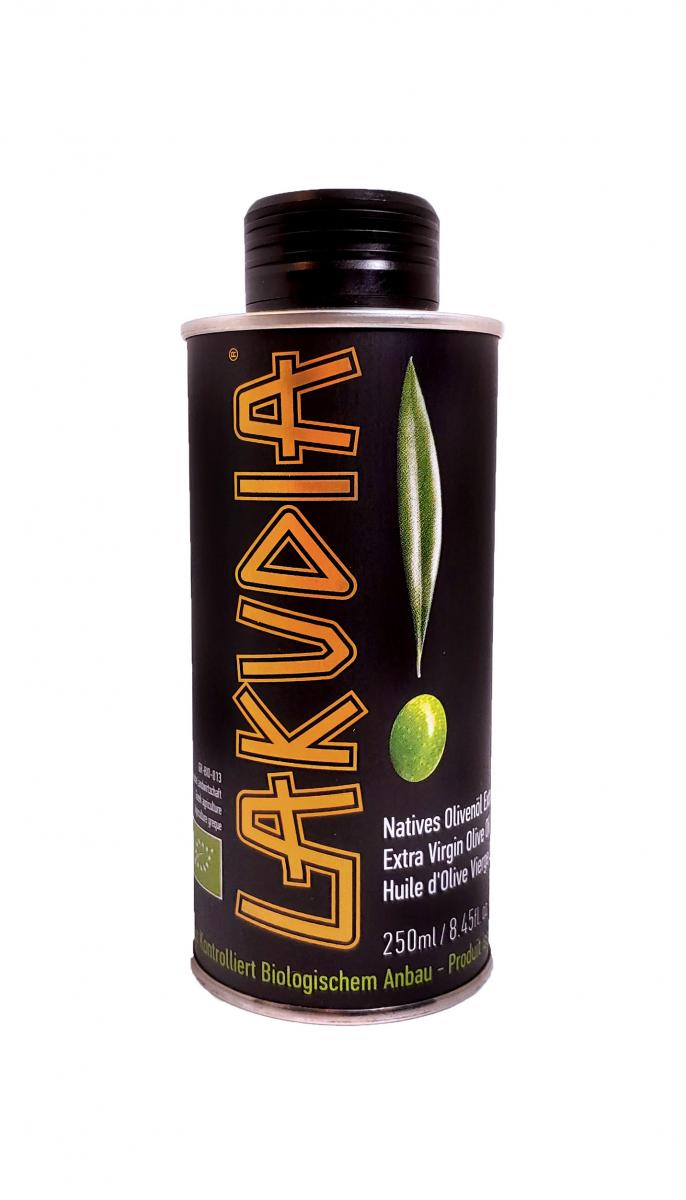
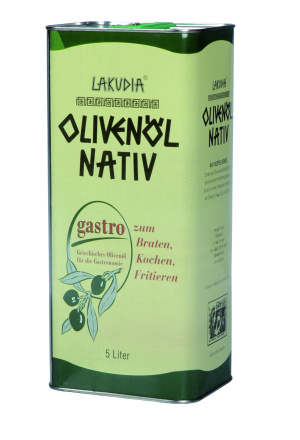
250ml organic can of Greek LAKUDIA olive oil
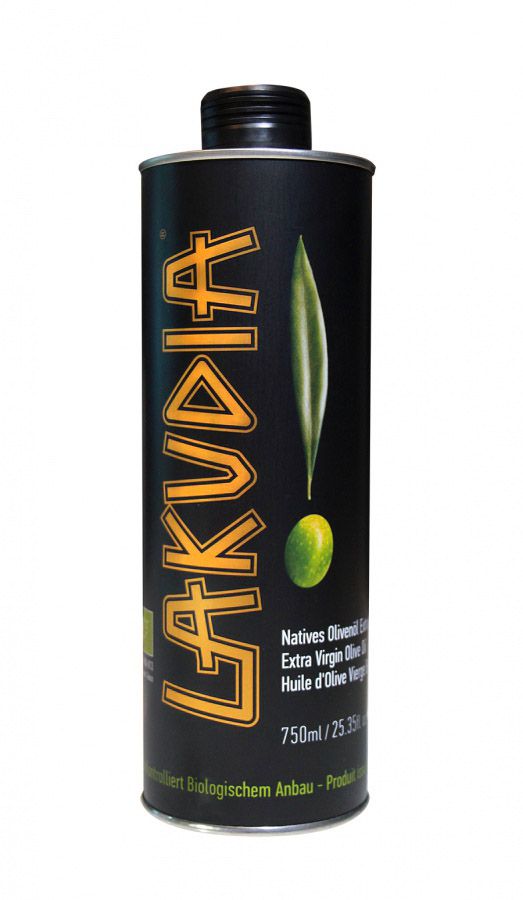
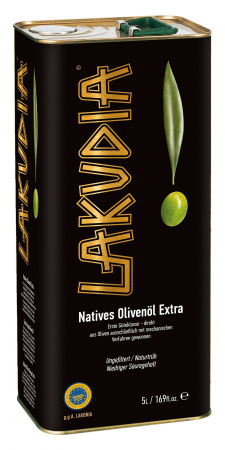
750 ml organic can of Greek LAKUDIA olive oil
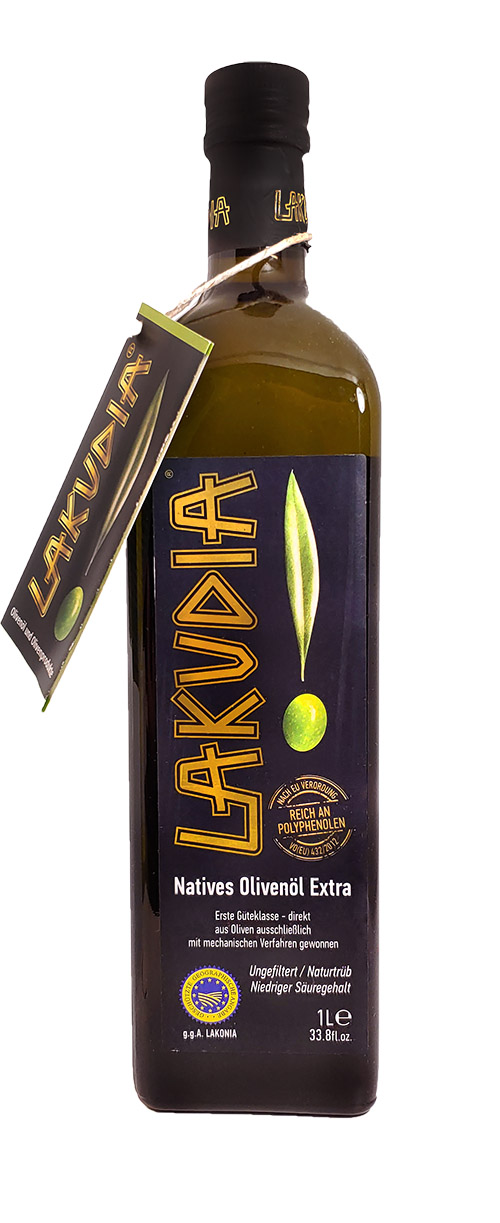
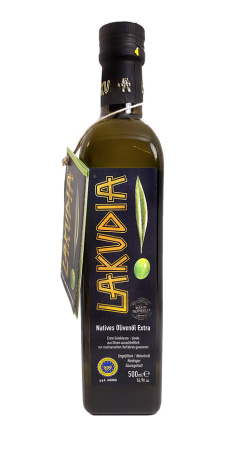
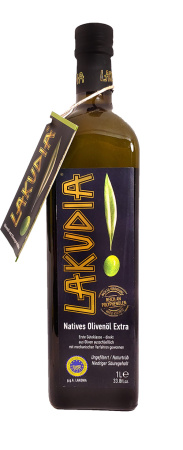
1 liter bottle of Greek LAKUDIA olive oil
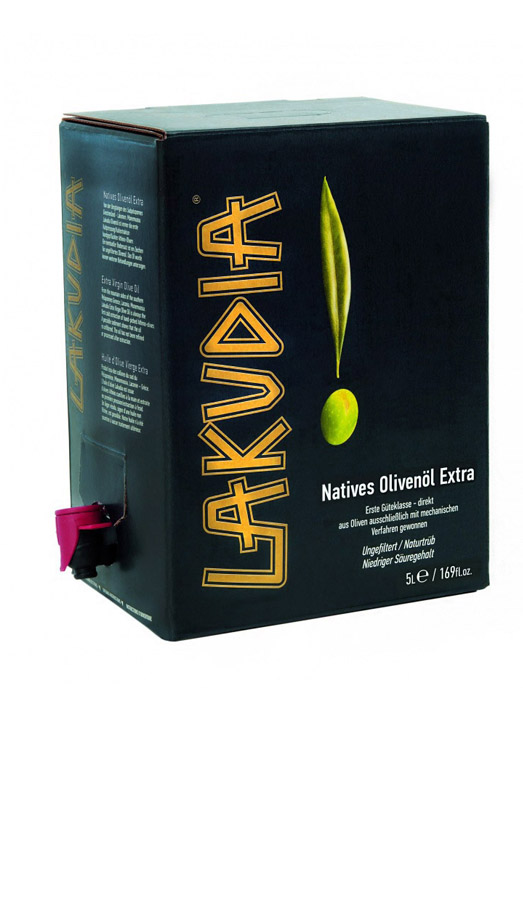
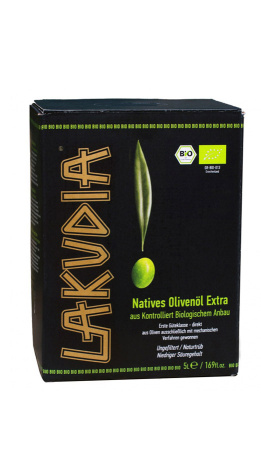
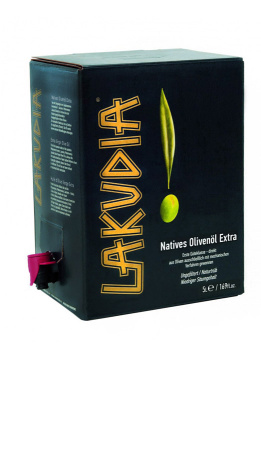
5 liter bag-in-box Greek LAKUDIA olive oil
Olive oil quality: High standards for quality grades
The European Commission has established precise definitions for the quality of olive oil. Strict controls ensure compliance. Key factors determining its value include impeccable taste, aroma , and color , as well as the free fatty acid content , calculated as oleic acid, among many other parameters. This applies particularly to extra virgin olive oils.
Crucial to quality is the fruity flavor, because olive oil should taste like olives, just as strawberry jam should taste like strawberries. This means the olive flavor must be impeccable. These days, experts can verify this. A certain bitterness and a touch of pungency are also among the positive flavor characteristics .
If the oil is not of impeccable quality due to an imperfect taste or excessively high acidity, it must not be sold as virgin olive oil, and therefore not as premium quality. The same applies to bad smell or color. The oleic acid level is, of course, always determined after pressing. In the food trade, the following three main quality grades are primarily offered: Extra Virgin Olive Oil, Virgin Olive Oil, and Olive Oil.
LAKUDIA Greek olive oil – a great variety of flavors
Olive oil is like wine: olive oil tastes different from every region. The soil, the climate, and nature create its unique character. Whether mild, medium, or intensely fruity – only extra virgin olive oils offer this wide range of flavors .
Olive oil, besides its typical fruity flavor, can also have aromas of apples, wild herbs, young artichoke leaves , or bitter almonds . Smell alone isn't the deciding factor, as even a mild-smelling oil can have a robust flavor. Ultimately, only by tasting can you find your personal favorite olive oil, or you could choose two or three different flavor profiles.
The LAKUDIA olive groves offer unparalleled quality!
Wir verwenden Cookies, um Inhalte und Anzeigen zu personalisieren, Funktionen für soziale Medien anbieten zu können und die Zugriffe auf unsere Website zu analysieren. Außerdem geben wir technische Informationen zu Ihrer Nutzung unserer Website an unsere Partner für soziale Medien, Werbung und Analysen weiter. Des Weiteren werden Cookies verwendet, die zum Betrieb unseres Webshops technisch notwendig sind. Dies ist nicht deaktivierbar. Nähere Informationen entnehmen Sie bitte unserer Datenschutzerklärung.










 Olive harvest for our Greek LAKUDIA gourmet olive oil